
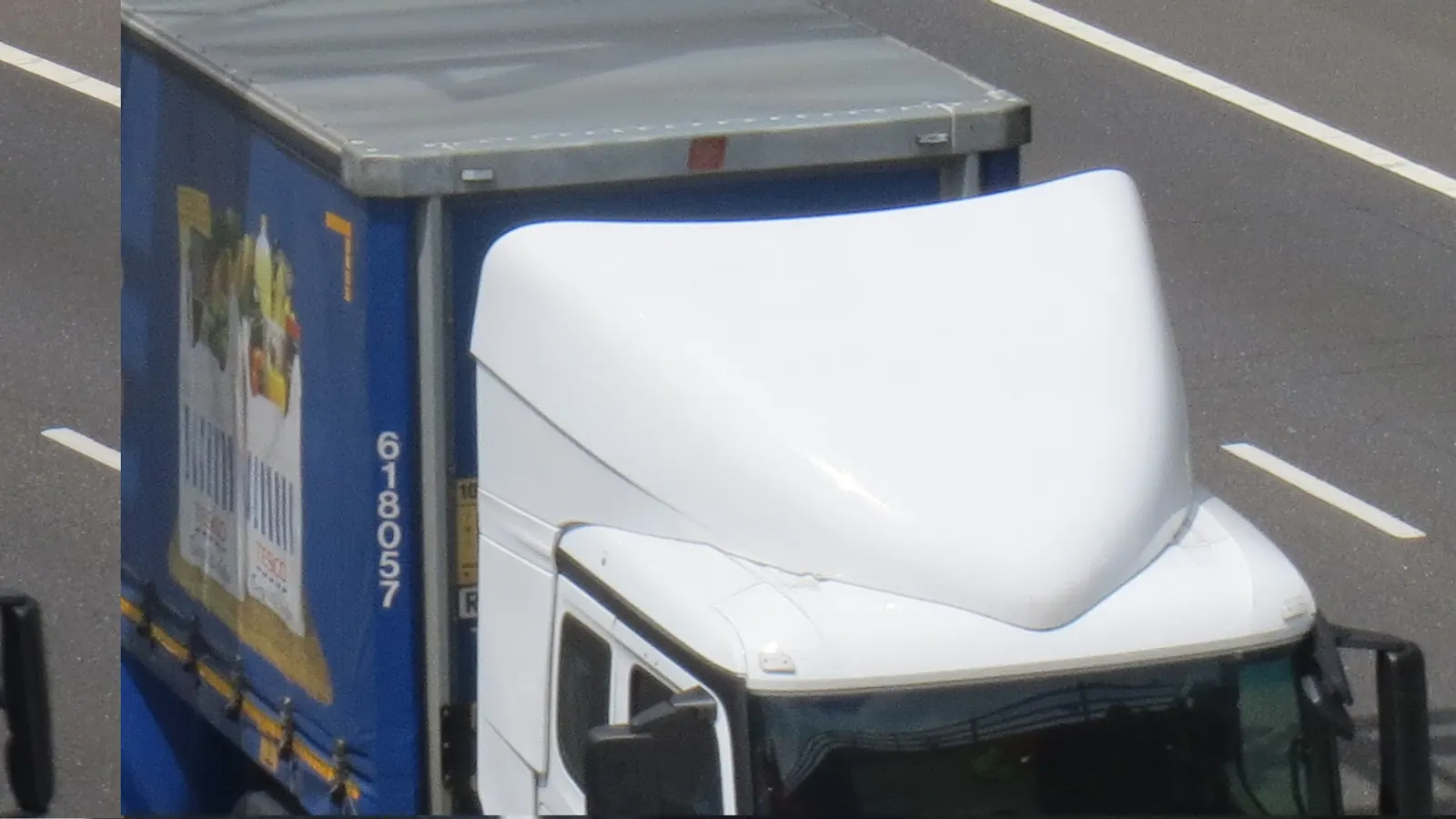
The most commonly used fuel-saving improvement for trucks is the aerodynamic roof spoiler. It sits on the roof of the cab and ensures smooth air flow over the trailer. A poorly designed roof spoiler — or no roof spoiler at all — causes the air flow to hit the flat front of the trailer, increasing the aerodynamic force the truck has to overcome and raising fuel consumption.
I am writing this article as an engineer who spent many years working at the University of Southampton to help Team GB win more Olympic medals. Much of this work involved aerodynamics. From my observations, many fleets in the UK are using poorly designed roof spoilers. This is most likely reducing their profitability and increasing the impact they have on the environment.
In this article I will describe what aerodynamic drag is, why roof spoilers are important, and what makes a good roof spoiler design. I will also demonstrate how to calculate the likely fuel saving from a well-designed roof spoiler.
Aerodynamic drag
Aerodynamic drag is the force caused when a body moves through air. Air has both a density (how tightly packed the molecules are) and a viscosity (how easily the molecules can move past each other). The density of air is about 1.23 kg/m³. The viscosity of air is the resistance of the air molecules rubbing together. When a truck collides with air molecules, these molecules rub against other molecules, and even more air gets dragged along with them. Because of this, the faster a truck moves the more extra air molecules that get dragged along.
The force experienced by colliding with air molecules and dragging them along increases with the square of speed. In other words, as speed increases, aerodynamic drag becomes a very big problem very quickly. For a typical truck travelling at 20 mph the drag is about 45 kg, at 40 mph about 180 kg, and at 56 mph about 360 kg.
The importance of air drag comes from the fact that it is experienced every second of every journey that a truck takes. To put this into perspective, every time a truck travels its own length it disturbs about 200 kg of air molecules. If we add this up over a distance, it only takes 4 km of driving for a truck to punch through 44 tonnes of air. And I don’t need to tell trucking companies they are paid to move cargo, not air molecules!
The importance of shape
It is not possible to move through air without disturbing it, however the shape of the truck makes a huge difference to how the air moves around it. We want a shape that disturbs the least amount of air. If we look to the airline industry we can understand what a streamlined shape looks like.
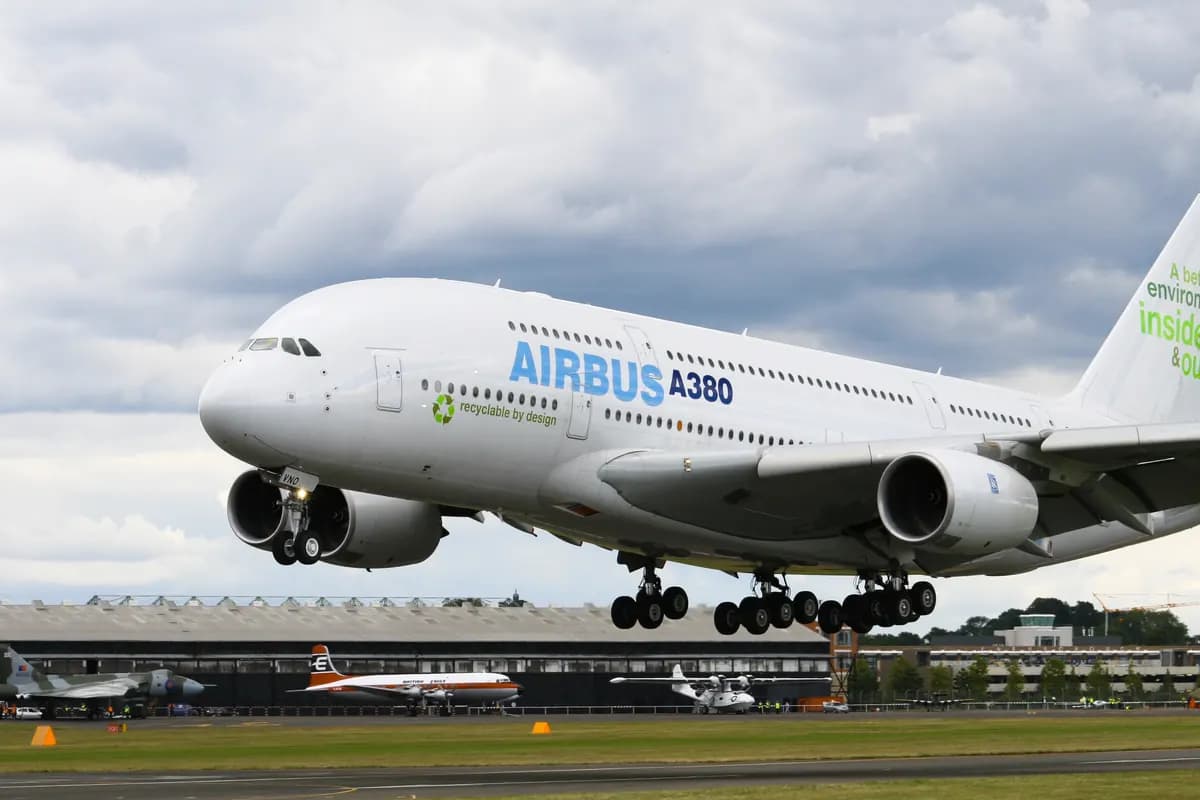
Because aircraft move so fast, they have to be streamlined. Even the slightest shape anomaly would require tonnes of additional fuel to be carried each flight. The critical aerodynamic shape attributes at the front of an aircraft are smooth continuous convex curvature.
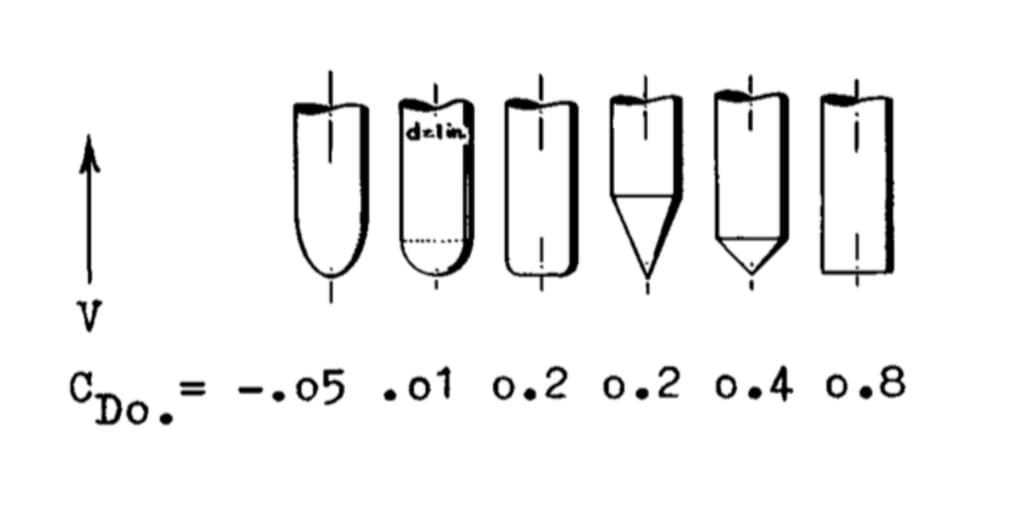
This concept is also supported by aerodynamics research published in “Fluid-Dynamics Drag” by Hoerner in 1965. The figure below demonstrates the effect of different front shapes on drag coefficient (a measure of how easily the shape will pass through air). It shows that a flat front with sharp edges is the worst shape and the best shape is a rounded front. It also shows that rounded edges alone make a significant drag reduction. We therefore want to emulate a smooth rounded shape on the front of trucks as best as possible.
Observations of roof spoiler designs
If we take a truck without a roof spoiler we have an extremely un-aerodynamic shape caused by harsh edges and a front-facing flat surface. These features will most definitely cause the vehicle to consume more fuel, especially at high speeds. Most fleets are aware that this is a poor configuration and do not operate vehicles in this way.

If we take the front of a truck with a well-designed roof spoiler, we have a shape that resembles the front of an aircraft: smooth continuous convex curvature that blends well into the trailer. These roof spoilers have clearly been designed from an aerodynamics point of view. Any further improvements would require an aerodynamic design process involving either wind tunnel testing or computational fluid dynamics. Vehicles using this configuration are becoming more common, however, are generally operated by large fleets.

The most common roof spoiler arrangements are somewhere in between the best-case and worst-case scenario. Below I take a few examples, and explain some of the potential design flaws and which features could be improved.
A common problem with roof spoilers is poor blending with the trailer. The figure below shows an unfortunate situation of a well-designed roof spoiler that does not blend well with the trailer. This causes the forward-facing flat surface and the edges of the trailer to be exposed to the flow. This will most likely increase drag and fuel consumption. This problem is particularly bad with tall trailers.
Roof spoilers fitted to tall cabs with sleeping bunks appear to be particularly bad. The roof spoilers in these cases are smaller so as not to block the window. When the trailer is the same height as the cab and the roof spoiler is angled down this is less of a problem. Where the trailer is taller than the cab, this roof spoiler does a poor job of creating the smooth rounded shape to the front of the vehicle.

Another poor feature is concave flare in the sides, followed by a sharp angle change between the roof spoiler and trailer. This deflects air away from the vehicle which will likely result in turbulence (swirling messy air) downstream. Convex curvature here would improve blending with the trailer as the angle between the trailing edge of the roof spoiler and trailer would be small.

The poorest roof spoilers I have observed are flat plates. These barely change the shape of the vehicle and are far from the smooth rounded front we desire. If the trailer is much taller than the cab I would expect little fuel saving from this device.

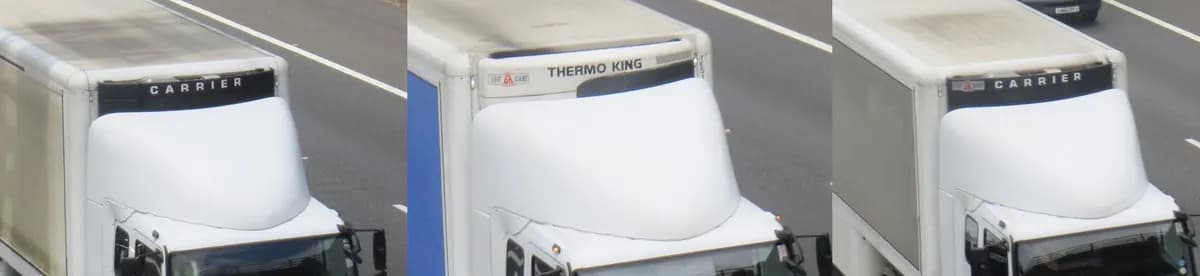
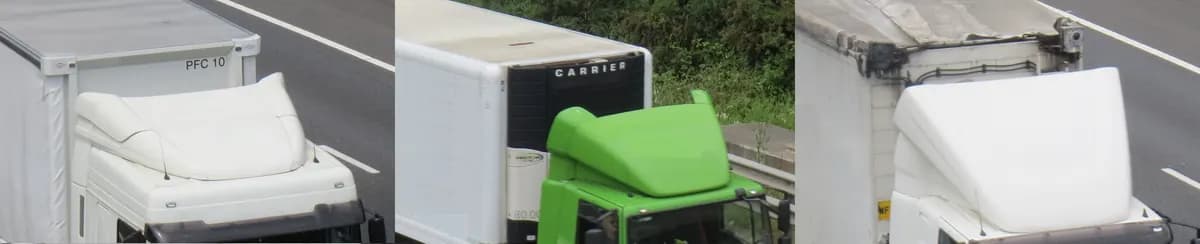
The roof spoilers pictured below are on regular low-top cabs and are not restricted by a cab roof window; however, they are flat with very little curvature. These roof spoilers are more akin to the second-from-right shape in figure 2 presented by Hoerner. More convex curvature to reduce the angle between the roof spoiler and the trailer would improve blending between the cab and the trailer.
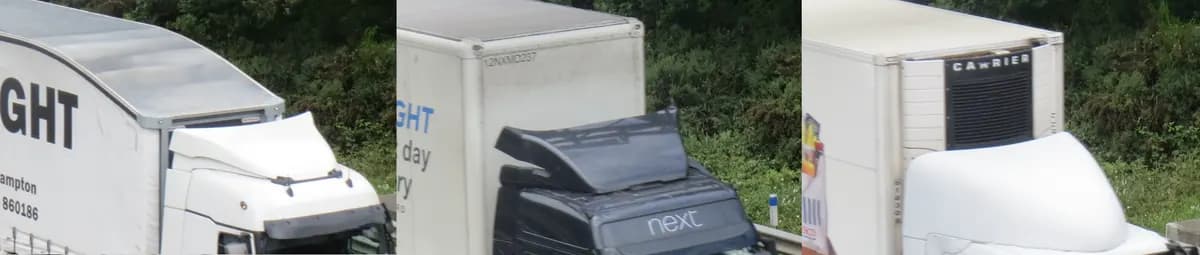
Double deck trailers present the biggest opportunity to save fuel from roof spoilers. However, I have not observed a perfect shape on a vehicle yet. In most cases the roof spoiler only covers a small portion of the trailer front. In some cases the trailer front has additional aerodynamics to account for this, however this does not result in an overall smooth rounded front to the vehicle. Sloping the front of the trailer improves the shape, however this also reduces the trailer capacity and creates dead space due to the internal shape of the trailer not accommodating the cargo. A better solution would be to create a roof spoiler that is designed for double deck trailers. Double deck trailers are becoming more common, and without adequate aerodynamics there will be significant fuel losses.
If we look again to the airline industry for inspiration, the Airbus Beluga is a perfect example. This “double deck” aircraft follows the rules as we have described with smooth continuous convex curvature at the front.

Why don’t all fleets use well-designed roof spoilers?
So, why do fleets use poorly designed roof spoilers? I propose three potential reasons:
- Fleets are not aware of the difference between a good and a bad roof spoiler.
- Roof spoiler manufacturers are not aware of the difference between a good and a bad roof spoiler.
- Cost.
I hope this article begins to address reasons 1 and 2 by helping both fleets and manufacturers understand what makes a good roof spoiler design. To address reason 3, fleets need to understand the potential cost-saving benefit of a well-designed roof spoiler. This should form the decision as to whether or not to invest in a good roof spoiler. This is a complex calculation, but I will provide a basic worked example with some hypothetical values to illustrate the process. The decision to invest in good roof spoilers will most likely occur when fleets renew their vehicles. Unless the cost saving was compelling, I do not imagine fleets will choose to remove existing poor roof spoilers and replace them with well-designed roof spoilers.
What cost savings can be achieved from a well-designed roof spoiler?
Using a simple analytical approach, we can investigate the cost effectiveness of upgrading a “hypothetical fleet” from a poor roof spoiler to a well-designed roof spoiler.
In the example below I make assumptions about the aerodynamic drag saving, and the drive cycle. These values are based on the characteristic and behaviour of a typical truck. However, for a more exact estimate, a sophisticated analysis on a case-by-case basis is required.
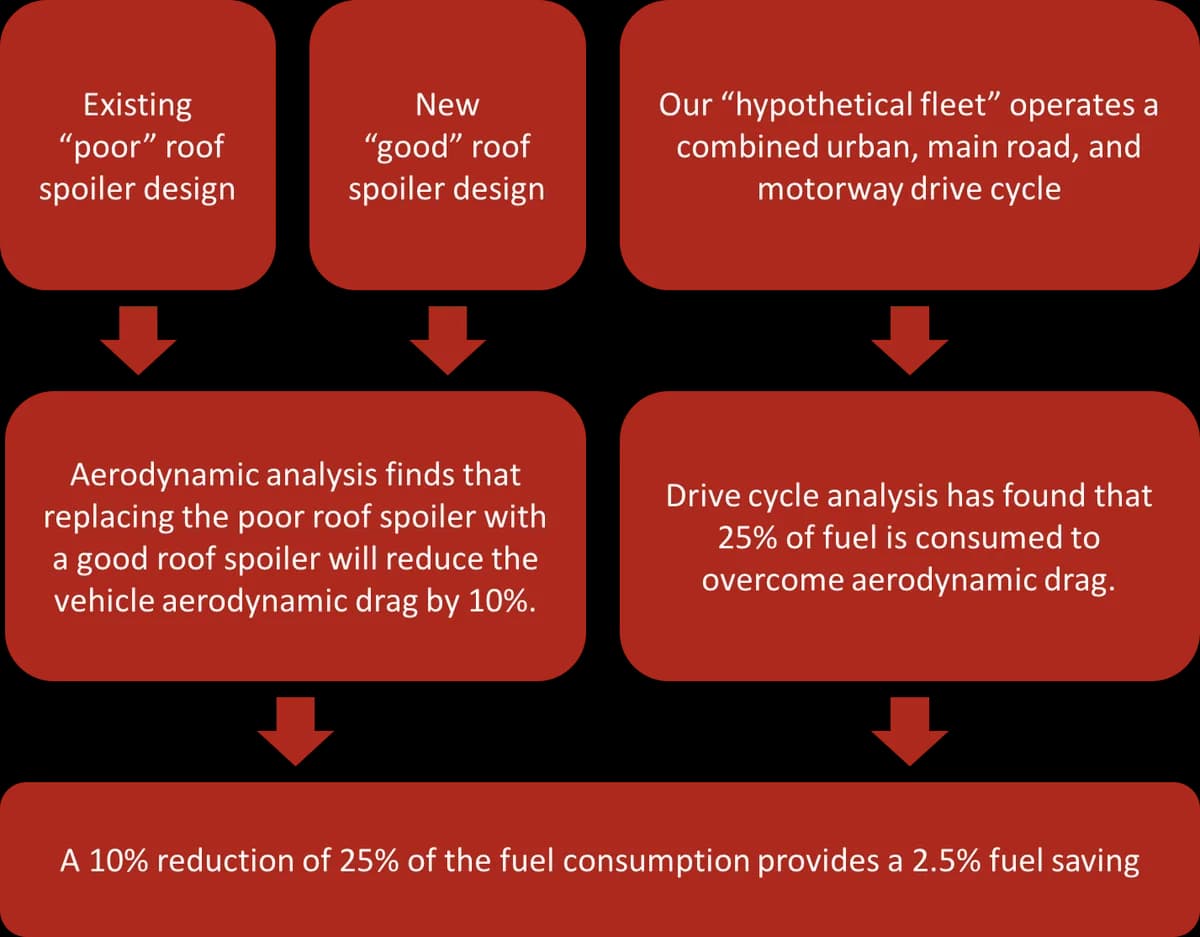
So, does this 2.5% fuel saving provide a return on investment?
Let’s assume that a vehicle travels 100k miles each year at 10 MPG. That’s 10,000 gallons a year. A fuel price of £0.95/litre equates to a total annual fuel cost of £43k. 2.5% of £43k is £1k. Assuming a 5-year vehicle lifetime that’s a total fuel saving of £5k per vehicle.
Most roof spoilers are priced around £1k–£2k. Therefore, it is possible for a good roof spoiler to save enough fuel to pay for itself and ultimately save a fleet money. For larger fleets, this may be enough money to cover the capital costs of entire vehicles, enabling them to increase their fleet size purely from fuel cost savings.
Dynamon’s Aero Analytics uses telematics data to make these fuel-saving predictions accurate for a real fleet operation — helping fleets choose the right aerodynamic and efficiency solutions to cut cost and emissions.